Plymouth, CT · Litchfield County
Whole-Building Fire & Smoke Odor Removal in Plymouth, CTHVAC Duct Smoke Cleaning & Surface Sealing For Residual Odor
Whole-Building Fire & Smoke Odor Removal in Plymouth pairs whole-house air scrubbing, HVAC duct smoke cleaning, and fire damaged material removal.
Answered 24/7
Fire and Smoke Odor Elimination Services in Plymouth
In properties throughout Plymouth, drywall, insulation, and upholstery absorb smoke deeply, so wiping surfaces rarely removes the smell. Treatment has to reach the air and the materials.
Homes in Plymouth and nearby areas like Thomaston, Terryville and Bristol Center share building styles that affect how smoke spreads through attics and walls. Local smoke odor elimination experts fog and ozone-treat the materials found in these homes.
Methods for Whole-Building Fire & Smoke Odor Removal in Plymouth
HVAC Duct Smoke Cleaning
Supply and return ducts, registers, and the air handler are all cleaned to remove soot and tar that would otherwise circulate.
Surface Sealing for Residual Odor
Pros find surfaces that absorbed smoke and still smell after cleaning, then coat them so odor cannot seep back out.
Ozone Treatment for Smoke Odor
Ozone treats the full air volume of a room. People, pets, and plants stay out until the space is aired out again.
Whole-House Air Scrubbing
Air scrubbers cycle all the air in the home through filters, removing particles so they do not settle again on cleaned surfaces.
Electrostatic Soot Removal
Removing dry soot this way keeps it from being ground into surfaces, so hard surfaces come clean throughout the home.
Indicators That DIY Odor Removal Has Failed
Soot Residue on Walls and Ceilings
Black or gray soot on walls and ceilings shows smoke residue that household cleaners tend to smear rather than remove.
Metallic or Chemical Odor Present
A sharp chemical or metallic smell usually comes from burned plastics or synthetics and needs stronger deodorizing than cleaning alone.
Smell Emanates From HVAC Vents
A smoky smell coming from vents means the HVAC system is carrying odor from the ducts into every room.
Smoke Odor in Closed Cabinets
Items inside closed cabinets that smell of smoke show the odor has passed through gaps and seals throughout the house.
How Whole-Building Fire & Smoke Odor Removal Works in Plymouth
Step 1: Assessment and Containment
Pros check how far smoke spread and set up plastic barriers so odor and soot do not reach clean rooms.
Step 2: Whole-House Air Scrubbing
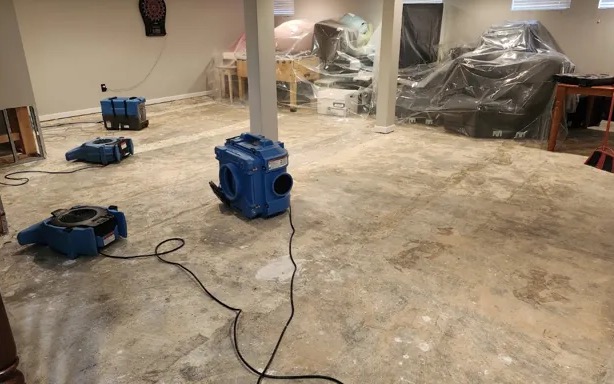
Air scrubbers with HEPA and carbon filters run continuously to pull soot and odor particles out of the air.
Step 3: Thermal Fogging Deodorization
A heated deodorizing fog is released so it reaches into porous materials and breaks down odor at the source.
Step 4: Surface Cleaning and Sealing
Surfaces are cleaned in detail, then porous ones are sealed with odor-blocking primer before repainting.
Factors That Complicate Odor Removal in Plymouth
Burning of Synthetic Materials
Burning furniture and plastics produce thick, oily smoke that leaves a sticky, strong-smelling residue on every surface.
Inadequate Ventilation During Fire
With windows and doors closed during a fire, smoke stays concentrated indoors and soaks deeper into materials.
Thermal Movement of Odor Particles
Heat from a fire pushes smoke and odor into small cracks and gaps throughout the structure.
Residual Oils From Incomplete Combustion
Oily residue from burned materials keeps giving off odor long after the fire is put out.
Fire Odor Removal for All Property Types
Residential Whole-Building Fire & Smoke Odor Removal
In homes, pros combine air scrubbing with ozone treatment suited to household materials, and plan the work so the family can move back in sooner.
Commercial Whole-Building Fire & Smoke Odor Removal
Office buildings often have long, complex duct runs. Pros remove burned materials, clean the ducts zone by zone, and scrub the air on each floor.
Why Whole-Building Fire & Smoke Odor Removal Requires Local Experts
Wash dishes, glassware, and metal fixtures that have a smoky film. Do not run ozone machines yourself in occupied spaces; whole-house odor needs professional air scrubbing and treatment.
Factors Affecting Whole-Building Fire & Smoke Odor Removal Expenses
In Plymouth, cost depends on how deep the smoke went and which materials it reached. Surface cleaning costs less than treating odor soaked into walls and insulation.
Severity of Smoke Penetration
Heavy smoke residue needs more cleaning passes and repeat treatments than light surface soot does.
Content Cleaning Scope
The number and type of belongings to clean, and whether they go off-site, affect time and cost.
HVAC System Contamination
Cleaning ducts and HVAC parts adds equipment time and access work to the job.
Does Insurance Cover Whole-Building Fire & Smoke Odor Removal?
Coverage depends on your policy and the cause of the fire. The experts document the damage with photos and notes; confirm coverage directly with your insurance provider.
Benefits of Hiring Smoke Odor Elimination Experts in Plymouth
IICRC-Standard Deodorization Methods
Pros follow established smoke odor protocols, treating odor at its source instead of covering it with fragrance.
HVAC System Decontamination
Ducts are cleaned so the HVAC system does not keep pushing smoke odor through the building after cleanup.
Comprehensive Odor Attack Plan
Air scrubbing, fogging, and sealing together treat both airborne odor and odor held inside materials.
Around-the-Clock Help for Smoke Damage in Plymouth, CT
Smoke odor gets harder to remove as it sinks into materials. For fire odor removal in Plymouth, call (475) 242-0613 for a 24/7 response.
Call Now (475) 242-0613Areas Served for Whole-Building Fire & Smoke Odor Removal
The places below are also served, and each one has its own page.
- Whole-Building Fire & Smoke Odor Removal in Thomaston
- Whole-Building Fire & Smoke Odor Removal in Terryville
- Whole-Building Fire & Smoke Odor Removal in Waterville
- Whole-Building Fire & Smoke Odor Removal in Bristol
- Whole-Building Fire & Smoke Odor Removal in Woodbury Center
- Whole-Building Fire & Smoke Odor Removal in Woodbury
- Whole-Building Fire & Smoke Odor Removal in Cheshire
- Whole-Building Fire & Smoke Odor Removal in Cheshire Village
Understanding Whole-Building Fire & Smoke Odor Removal: Frequently Asked Questions
What's the difference between cleaning and deodorizing?
Cleaning removes visible soot residue, while deodorizing breaks down the odor molecules left behind. Most fire jobs need both steps.
Are personal belongings safe during ozone treatment?
People, pets, and plants must stay out during treatment. Most belongings can stay, though pros may remove items made of rubber or other sensitive materials.
Why is HVAC duct smoke cleaning necessary?
Soot in the ducts spreads odor every time the system runs. Cleaning the ducts stops that cycle so treated rooms stay fresh.
How effective is electrostatic soot removal?
Charged cleaning solutions attract fine soot and lift it off surfaces, which prepares them for deodorizing and paint.
What happens during content decontamination and cleaning?
Belongings are listed, cleaned with methods suited to each material, and often deodorized so they can be kept instead of discarded.